How MorMurdoch is thinking U.S. Support for Israel Could Accelerate Nuclear Proliferation

I think Trump revealed the United States' hand; that is, he exposed the political and economic costs that serve as barriers to launching land invasions. He showed our adversaries that we are unlikely to put boots on the ground unless there is a perceived existential threat or a personal grudge, whether genuine or redirected toward a manufactured enemy.

As a result, the USA's adversaries' incentive may now be to acquire nuclear weapons as a deterrent against airstrikes and intervention by sea or air.

I do not think the United States should have sacrificed its aura for Israel. To prevent another country from acquiring nuclear weapons, the United States would likely need to conduct a land invasion or resort to using tactical nuclear weapons. If it cannot generate sufficient public support for such a war, it may be unable to do either.

Siding with Israel makes it much harder to build public support for military intervention because of the perception that Israel is committing genocide. Personally, it appears to me that Israel is committing genocide, as defined by the term, out of concern that allowing a fully open democracy would fundamentally change the country as its leaders envision it, namely a theocratic state. If the proportion of non-Jewish people in the government were to become large enough to take control, Israel would become a vastly different state that would no longer align with their desired political & cultural vision.

Israel's actions could contribute to nuclear proliferation by creating new adversaries or pushing countries such as Turkey into adversarial relationships. https://www.brookings.edu/articles/its-time-to-get-us-nukes-out-of-turkey/

Without an overwhelming technological advantage, the United States is unlikely to be able to overcome the significant geographic advantages enjoyed by some of its manufactured adversaries like Iran.

Siding with Israel is a mistake.

It could even become a Great Filter for humanity. If the world's greatest power aligns itself with a country that has what I view as an entrenched/inherent persecution complex, the United States government could end up creating more & more adversaries than they're are capable of confronting simultaneously or sequentially.

Representative Adam Smith on U.S.-Israel Relations, Defense Policy, and Democratic Party Challenges

MoribundMurdoch's Reaction:

I'm quite anti-Israeli-government, but Krystal really didn't make her case very well here. This was painful to watch. I might just be especially allergic to democratic-socialist-style framing. Maybe it lands better with her crowd. That said, I'm not a fan of sanctions on any country, regardless of regime. She'd agree with me on Cuba, yet she's a hypocrite on Israel. Not great for anyone who claims to be principled or cares about innocent populations. Also instead of truly addressing the obvious problems with the current democratic socialism like open borders, modern monetary theory, etc. she quickly pivots.

Summary

Representative Adam Smith, the top Democrat on the House Armed Services Committee, offers a nuanced perspective on today's most pressing political issues. He dives into the complexities of U.S. defense policy, Israel-Palestine relations, and the ongoing divisions within the Democratic Party. Notably, Smith explains his journey from supporting to opposing a National Defense Authorization Act (NDAA) provision for enhanced U.S.-Israeli military co-development, a shift driven by deep concerns over the current Israeli government's policies and the broader political climate.

While strongly defending Israel's right to exist, Smith is candid about the aggressive posture of the Netanyahu administration, particularly regarding Palestinians in Gaza and the West Bank. Taking a firm stance, he supports sanctions against extremist Israeli officials. He even voted for an amendment to block specific U.S. aid to Israel as a direct political message to its leadership, fully aware of the potential backlash from influential pro-Israel groups like AIPAC.

Turning to Democratic Party dynamics, Smith critiques both sides of the aisle. He challenges the left for pushing policies like open borders, defunding the police, and unchecked deficit spending. Simultaneously, he calls out the establishment for inadequate economic reforms and poor messaging that contributed to electoral losses against Donald Trump. Instead, Smith advocates for practical governance. He expresses sympathy for economic populism and targeted socialist policies focused on real-world results, praising pragmatic figures and emphasizing the necessity of realistic solutions over ideological purity.

On domestic policy, Smith clarifies his past efforts to abolish ICE. His goal is not to eliminate immigration enforcement entirely, but rather to enact meaningful administrative reform. He stresses the critical need for robust, transparent border enforcement that is carefully balanced with humanitarian considerations.

Finally, Smith calls for stronger congressional oversight of the executive branch, especially concerning defense and foreign policy. He champions the limitation of large independent expenditure money in elections from influential groups like AIPAC, despite acknowledging the steep challenges of campaign finance reform. Even after losing AIPAC's financial backing due to his shifting stances, Smith remains open to dialogue. He firmly rejects the idea of excluding socialist voices from the Democratic Party, advocating instead for a broad coalition built on respectful, wide-ranging conversations.

Highlights

  • Shift on US-Israel Military Policy: Representative Adam Smith reversed his stance on NDAA Section 224, ultimately opposing US-Israel military co-development due to ongoing concerns with the Israeli government.
  • Critique of Netanyahu: While firmly defending Israel's right to exist, Smith strongly condemns the Netanyahu administration for its aggressive policies and continued expansionism in Palestinian territories.
  • Conditioning Foreign Aid: He supported blocking specific US aid to Israel as a direct protest against the government's current trajectory and to signal opposition to officials advocating for ethnic expulsion.
  • Defense Oversight: Smith underscores the critical need for robust congressional oversight in defense policy to counter executive overreach and navigate political gridlock.
  • Pragmatic Economics: Championing practical governance over ideological purity, he expresses openness to economic populism and targeted socialist policies that yield realistic solutions.
  • Immigration Reform: He advocates for abolishing ICE as a standalone agency, proposing instead that immigration enforcement be restructured under the purview of the Department of Justice.
  • Democratic Party Cohesion: Critiquing illiberal activism on the left, Smith calls for a return to civil discourse, respectful dialogue, and strategic coalition-building within the Democratic Party.

Key Insights

  • NDAA Section 224 & U.S.-Israel Military Cooperation: Balance of Military Innovation & Political Accountability

    Smith clarifies the provision focuses on co-development, especially missile defense, leveraging Israeli expertise without merging militaries or circumventing Congressional oversight. His shift away from support reflects the tension between strengthening defense capabilities and political realities of U.S. relations with an increasingly controversial Israeli government. This underscores how defense policy can intersect with broader ethical and accountability concerns, illustrating the limits of military collaboration when political leadership diverges significantly from U.S. values.

  • Congressional Oversight vs. Executive Action in Defense & War Powers

    Despite opposing the NDAA due to provisions funding a war in Iran and concerns about the Israeli-related sections, Smith insists on passing the bill to maintain legislative oversight functions. This highlights the strategic dilemma faced by minority party members: withholding support risks ceding even more control to the executive branch, which may act unilaterally or illegally. It shows the complex interplay between law, policy, and practical governance in a polarized Congress.

  • The Israel-Palestine Conflict: No Easy Solutions in a Grim Reality

    Smith's position affirms Israel's existential threats while acknowledging its current trajectory toward illiberalism and apartheid-like conditions. His skepticism about the viability of a two-state solution, combined with reluctance to endorse a one-state solution, reflects the profound deadlock in resolving the conflict. His analysis gives voice to an emerging bipartisan recognition that traditional frameworks for peace have failed, urging a reconsideration of U.S. aid and diplomatic strategies.

  • Voting to Block Aid as Political Messaging

    Smith's vote for the Massie amendment, which aimed to block aid to Israel, signals a willingness to use Congressional power to express disapproval of Israeli policies, despite potential political costs, including loss of support from influential lobbying groups like AIPAC. This illustrates a shifting landscape where support for Israel is no longer monolithic within the Democratic Party and where foreign policy decisions increasingly reflect domestic political considerations and constituent pressures.

  • Democratic Party Divides: Electability vs. Ideological Purity

    Smith provides a measured critique of both the Democratic establishment and the left-wing factions, attributing electoral defeats partly to ineffective economic policies and partly to leftist positions such as open borders and defunding the police. He frames these not only as political but substantive policy problems affecting party credibility. His stance suggests that the Democratic Party needs a pragmatic economic populist approach that blends welfare expansion with fiscal responsibility, avoiding extremes that risk alienating moderate voters.

  • Immigration Enforcement Reform: Abolish ICE but Maintain Enforcement

    Smith supports abolishing ICE as an agency but clarifies that he advocates for immigration enforcement functions moving back to the Department of Justice in a reformed manner. This nuanced position counters simplistic "abolish ICE" slogans, emphasizing administrative restructuring over the elimination of enforcement, acknowledging political feasibility and governance necessities.

  • The Role of Discourse & Coalition Building in Party Unity

    Smith expresses frustration with illiberal and confrontational activism on the left, including disruptions and threats at town halls, seeing it as detrimental to fostering productive political debate. He calls for respectful dialogue to overcome factionalism within the Democratic Party and improve governance, reflecting a broader concern about the rise of political polarization and its impact on democratic processes.

  • Campaign Finance Reform & Influence of Independent Expenditures

    Smith criticizes the outsized influence of outside money, whether from AIPAC, big pharma, or labor unions, on elections, calling for bans on independent expenditures, especially in primaries. He recognizes constitutional and practical challenges but supports party rule changes to limit such spending where possible, framing this as essential for democratic integrity and reducing external influence on candidate selection.

  • Willingness to Work Across Factions & With Former Backers

    Despite losing AIPAC support, Smith remains open to dialogue and maintains a principled stance that elected officials should vote according to their convictions, not donor preferences. He draws a line rejecting absolute separation from ideological wings within the party, promoting inclusiveness while advocating for responsible policy debate, highlighting the complexities of coalition politics in contemporary America.

Conclusion

Representative Adam Smith provides a candid, nuanced exploration of multiple contentious issues facing the Democratic Party and U.S. policy today. His pragmatic approach balances defense security needs with democratic accountability, while recognizing the hard realities of the Israel-Palestine conflict and the limits of current policy frameworks. His critique of both establishment and left elements within the party points toward the need for strategic economic populism and respectful discourse. Smith's emphasis on oversight, political messaging, and electoral viability reveals the intricate balancing act elected officials face in an era of deep partisan and ideological divides.

Why “Socialism” Had to Be Redefined to Survive

People today often claim that socialism and capitalism “aren’t mutually exclusive.” But this position only exists because the definition of socialism has been repeatedly softened, stretched, and watered down every time the classical versions failed in practice.

The original idea didn’t change because it succeeded. It changed because it didn’t.


The Classical Definitions of Socialism

Historically, socialism had clear, unmistakable meanings. These included:

  • collective or state ownership of the means of production

  • abolition of private property

  • state control of production and distribution

  • and, in Marxist theory, the transitional phase between capitalism and communism where the state dominates production

These definitions all point in the same direction: removing private ownership and replacing market coordination with political or bureaucratic control.

My Question on r/AskConservatives Was Removed for Being a “Meta” Question: Was It Really About Policy, or Fear of Platform Censorship Over Israel-Related Topics?

 My question on r/AskConservatives was removed for being a “meta” question. Is there any justification for censoring this type of post? Could the moderators be concerned that it might provoke a negative reaction and lead Reddit to censor the entire subreddit?


I assume it mostly stems from my admittedly speculative questions about the incentives for invading Nigeria, along with the goofy comments referencing the Crusades, which, ironically, was the point of the question: that Americans could once again be duped into a forever war because of such sentiments.


Exploring Koch-Funded Podcasts: Directly or Indirectly Funded

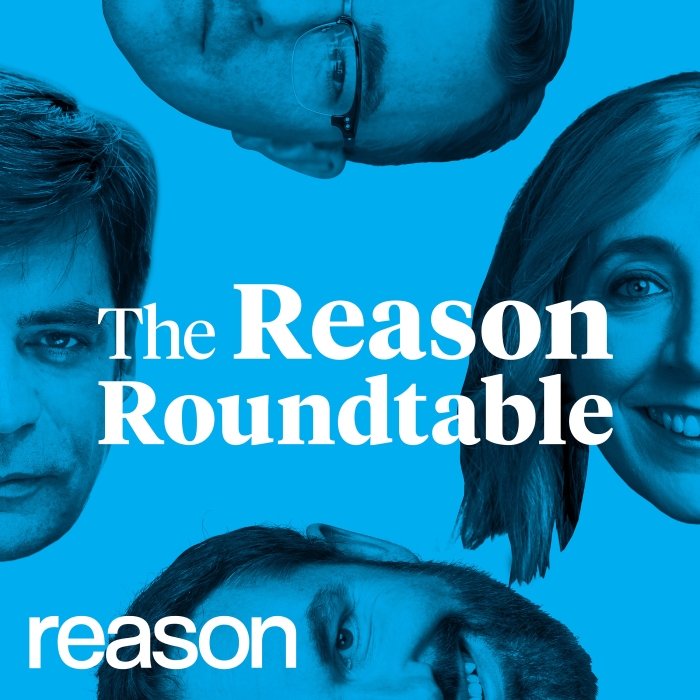
  • The Reason Roundtable

    NPR Politics Podcast Logo

    Every Monday, the libertarian editors of the magazine of “free minds and free markets”—Matt Welch, Nick Gillespie, Katherine Mangu-Ward, and Peter Suderman—discuss and debate the week’s biggest stories and what fresh hell awaits us all.

  • The Rubin Report

    The Rubin Ropert Podcast Logo

    Dave Rubin is a bestselling author, comedian, and TV personality, known for his political commentary. He hosts The Rubin Report, a top talk show focused on politics, culture, and current events. The show is fan-funded, with viewers playing a key role in supporting its message of freedom and open dialogue.

  • Going Big

    The Going Big Podcast Logo

    Going Big! is a top-ranked podcast hosted by Kevin Gentry, focusing on transforming marketing and fundraising. Each episode features influential business and nonprofit leaders discussing strategies for driving impactful results. The podcast offers valuable insights for leaders and changemakers aiming to make a positive difference in organizations and communities.

  • U.S. Taxpayer-Funded Podcasts (As of June 2025)

    The production of podcasts has cost U.S. taxpayers more than $8.5 million since early 2020, according to a report by the government watchdog OpenTheBooks.

    Through a combination of grants and other funding, the federal government provided a total of $8,535,556 to produce podcasts between February 2020 and September 2023. The overarching projects responsible for the podcasts received a staggering $323 million over the same time period.

    The National Desk: US Taxpayers Have Funded $8.5 Million in Podcasts Since 2020


    Tolerating the Misguided: An Inoculation Against Villainy: Defending Odysee

    According to The Guardian, the platform Odysee issued guidance to moderators stating that “a Nazi who makes videos about the superiority of the white race” would not, in itself, be grounds for removal from the platform. I "MoribundMurdoch" agree with Odysee’s stance, particularly because the notion of white superiority is non-threatening—it’s both foolish and easily refuted. While racism and ideas of racial superiority may have posed greater challenges when people first began to intermingle, once the absurdity of discriminating based on immutable characteristics becomes evident, such beliefs inevitably shatter like glass. Tolerating even misguided ideologies, like those espoused by neo-Nazis, aligns with the core principle of a free speech platform. The benefits of such a platform are significant—when extreme voices engage with more reasonable individuals, there’s a potential for redemption. Conversely, if we retreat in fear from vice and evil, many will remain unchallenged and unprepared, leaving large swaths of people vulnerable to these very ideas and vices.
    The primary challenge for a free speech platform is that its early adopters tend to be more extreme voices—those with fringe opinions, such as hardcore socialists, libertarians, mentally ill people with poor impulse control, individuals banned from mainstream platforms, fascists, etc.—rather than mainstream liberals or conservatives. In this early internet age, people are highly brand-conscious, and guilt by association has grown especially potent, particularly in today’s zeitgeist of left-leaning liberalism, where a cancel culture for controversial speech has become commonplace.


    Normal Person Leaving the Free Speech Platform: Link To A Blog Post About A Normal Person Leaving The Platform

    Article That Inspired This Blog Post 


    A Reaction to Jordan Peterson's "12 Rules for Life Tour - Melbourne, Australia." YouTube Video            

    Jordan Peterson seems a bit monomaniacal in regards to this hierarchy/nature over nurture vibe to his argumentation. I Sydney Barbour am in the opposing camp to this "vibe".  I prefer a non-positional mindset [An insouciant attitude towards the rat race, especially when someone has gratitude for things regardless of how they may benefit from them in regard to the pecking order.]. I suppose my position comes out of constructivism, social constructivism, nurture over nature/nurture over the hereditarian arguments, and radical fluid identity theory [which posits that many of the putative unchangeable characteristics, such as race or gender,will become irrefutably protean in the future given we reach the point where it's technologically possible to do things like switch genders or race more easily & or in a (more) irrefutable manner. Supposed unchangeable characteristics would become patently changeable & analogous to the clothes one chooses to wear or the colour of hair one chooses to have.]. 

    I do like his grow the pie vibes & his opposition to cherry-picking the 1% that would conveniently leave out the middle class of highly developed countries as opposed to the significantly less well-to-do countries.I dig him calling out some hypocrisy of them phony statisticians -- dude. 


    The Murdochian Political Ideology [Attempt II]

    1. A person who substantially agrees with Murdoch Maxwell

    2. Murdoch Maxwell advocated for a voluntary society in which groups and individuals maintain and develop their culture or interests whilst maintaining a pluralist attitude valuing philoxenia (a love of strangers). Their philoxenia & their pluralist attitude are valued by each of the societies, despite them being apart of various schools of thought because they all consider the possibility that the other society is more correct. Each of these societies evinces a willingness to update their theories as more evidence becomes available. These voluntary societies treat their ideas like code where there are willing to update to new versions, fork into separate versions experimenting with different ideas, and are willing to boot up older iterations with the knowledge they obtained with newer iterations.

    Not Murdoch: "Dude your Murdochian ideology sounds a lot like GitHub."
    Murdoch: "Yeah, it's totally GitHub dude."

    The GitHub Political Party

    Advocates for a government where policy is managed via a respiratory hosting service that governs voluntarily via subscription plans. The GitHub Political Party would put in place a open-source government that stores revisions of projects for ideologies and policies. 
    In practice the Github party would advocate for a voluntary society in which groups and individuals maintain and develop their culture or interests whilst maintaining a pluralist attitude valuing philoxenia (a love of strangers). Their philoxenia & their pluralist attitude are valued by each of the societies, despite them being apart of various schools of thought because they all consider the possibility that the other society is more correct. Each of these societies evinces a willingness to update their theories as more evidence becomes available. These voluntary societies treat their ideas like code where there are willing to update to new versions, fork into separate versions experimenting with different ideas, and are willing to boot up older iterations with the knowledge they obtained with newer iterations.
    Within these voluntary societies people will be able to vote with their feet or dollar ;in lieu of, diluted votes associated with regular democracy. 

    Reimagining Socialism: A Governmental Framework for the Future

    Isn't the iterations of socialism that are emerging these days making socialism look bad? In contemporary discussions, socialism is often associated with excessive centralization, bureaucracy, and regulations that only seem to necessitate even more regulations.

    The Flaws of Current Socialism

    We're stuck with electoral market-socialist policies that undermine our markets. This socialistic system should not be tied to any nation-state; rather, socialism should be seen as a governmental system of the future—one suited for a land of decentralization, where smart contracts replace lawyers, and scarcity becomes a thing of the past.

    Unfortunately, socialism does not appear to benefit any modern nation-state system. If only socialists had an anarchic agorist movement instead of adhering to revisionist Marxist and reformist ideologies. This would allow them to experiment with various iterations of their "ideology in process" rather than releasing substandard policies that result in higher living costs, which in turn make a minimum wage seem necessary—a policy that often exacerbates the problem.

    The Impact of Current Policies

    The versions of socialism being introduced lately are substandard and lead to inflation year after year, enriching the wealthy while diminishing social mobility. This creates a situation where individuals must become stock speculators or seek alternative currencies to escape their national currencies. Such issues contribute to the socialists’ poor track record, often linked to flawed Keynesian economics.

    A New Approach to Governance

    Perhaps we should treat these socialists like governnauts—a term derived from "govern" and "naut," where "naut" is a suffix meaning "sailor" or "explorer." Thus, governnauts are explorers of new forms of governance. We should support their exploration through voluntary crowdsourcing, unlike the current non-voluntary democratic socialism that feigns consent through incomplete democracy. Socialists should consider relocating to a seastead or similar environment, where they can develop their ideology more voluntarily and allow individuals the right to secede from such systems.

    Embracing Austrian Economics

    While socialists explore these new ideas, if we must continue with nation-state systems, I propose that Austrian economists take charge. Their approach can help mitigate the negative aspects associated with crony capitalism, including revisionist Marxism, market socialism, mercantilism, and protectionism. We should strive to increase the popularity of Austrian economics.

    Redefining Government and Business

    Governments should be treated like companies competing for customers, while companies ought to act as though they exist for the public interest, with more explicit philanthropic goals. Ideally, governments would adopt a voluntary subscription model, incentivizing individuals to contribute to others' welfare and thus avoid the pitfalls of involuntary socialism.


    Written By: Levi Mulder (a forked personality of Murdoch’s with a Republican political bias)

    Author's Note: Murdoch will write under the influence of various political characters, including Elliot McCreary (anarcho-syndicalist), Sydney Barbour (voluntaryist), Jody Hewitt (socialist/democrat/market socialist/democratic socialist), and Carson Malley (environmentalist), among others.


    Raw RSS Feed

    WearYourDictionary

    Total Pageviews